

Visayas Region Convenes First Regional Policy Dialogue to Advance Disaster and Climate Resilience Governance
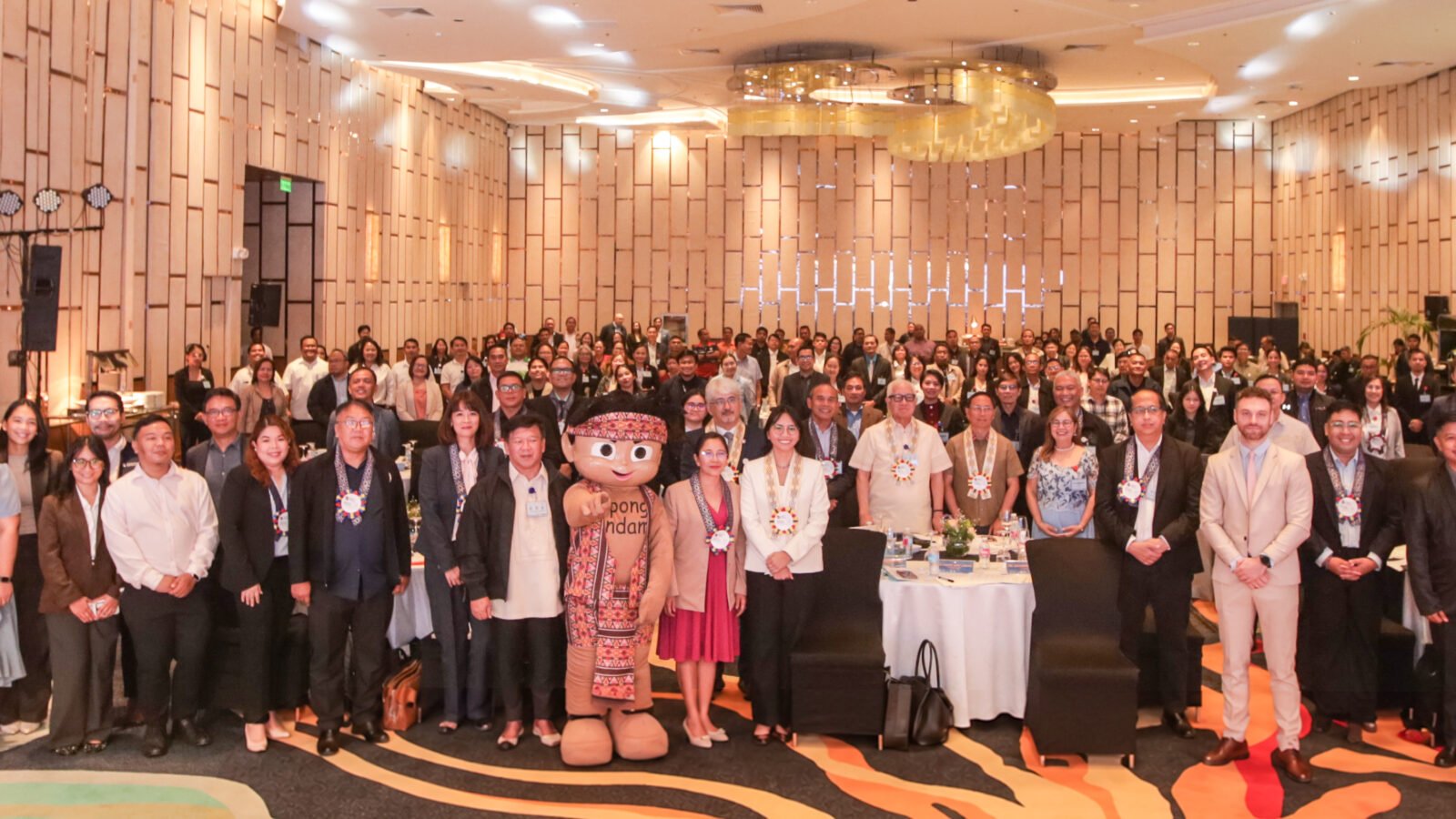
On September 23, 2026 in Lapu-Lapu City, Cebu, national government agencies, local government units from the Visayas, development partners, academic and research institutions, private sector representatives and civil society organizations convened for the Visayas Regional Policy Dialogue on Advancing DRR-CCA Governance and Resilient Development, held under the theme “Where Policy and Leadership Meet Evidence-Driven Local Action for Resilience.” The Dialogue brought together various stakeholders from across the Visayas to strengthen the connection between national DRR-CCA policies, evidence and local implementation, and to identify practical priorities for more resilient and locally responsive development.
The Dialogue is the inaugural regional engagement under the Disaster Risk Reduction Enhancement at the Local Level Technical Assistance (DRREALL) Project’s Research-to-Policy Roadmap. It was organized by the Department of the Interior and Local Government (DILG), with technical and operational support from Expertise France and the Agence Française de Développement (AFD), and funding from the European Union (EU). The DRREALL-TA Project supports the Philippines’ decentralization of disaster risk reduction and management (DRRM) functions by strengthening national and local capacities and supporting LGUs in addressing local DRRM priorities and accelerating the implementation of the National DRRM Plan 2020–2030.
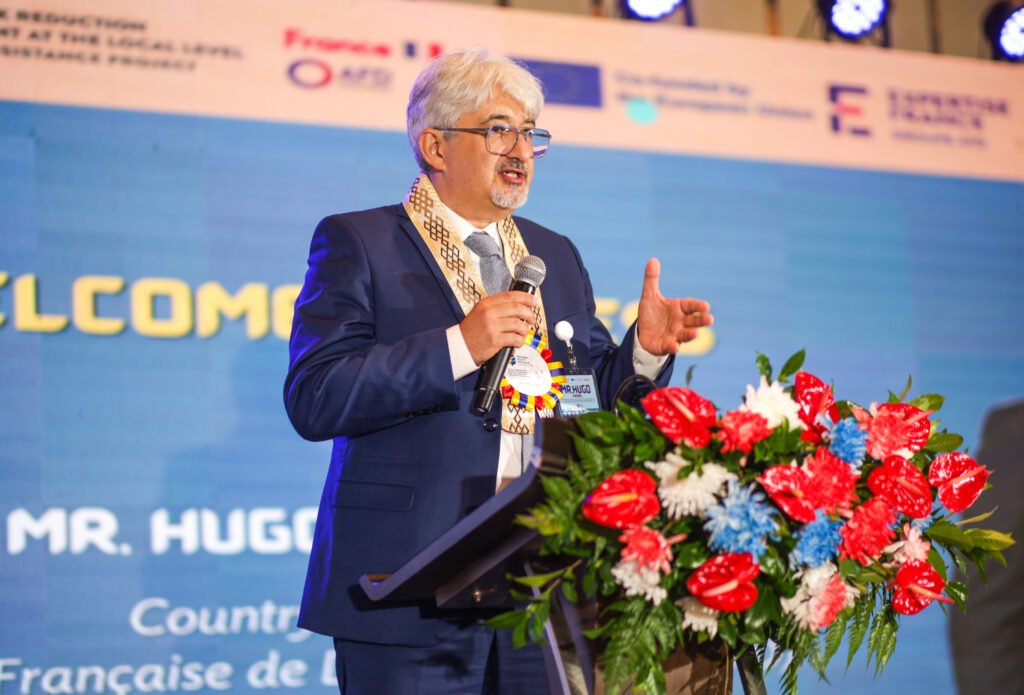
Opening the Dialogue, AFD Philippines Country Director Hugo Pierrel reflected on what the region’s recent experience reveals about the changing nature of risk. “Cebu has experienced what disaster risk management increasingly means in a changing climate: not one isolated hazard, but multiple, overlapping and cascading risks. It is crucial to hear from the Local Government Units, key player on the ground and user of the policies, procedure and tools to prevent and manage risks and disasters.”
He affirmed the continued commitment of France, AFD, and the European Union to the country’s resilience agenda, and expressed hope that the day’s discussions would help move the Philippines from frameworks and regulations to concrete implementation, from national commitments to local action, and from facing disasters to managing risk.
“Under our new EU-Philippines Enhanced Partnership, we aim to strengthen cooperation on disaster risk reduction, early warning and preparedness, with local communities at the heart of these efforts. Through DRREALL, we are supporting local governments in turning this shared ambition into practical action. Local experience and scientific evidence must inform policies that respond to the realities communities face,” said EU Ambassador to the Philippines Massimo Santoro.
“Our Global Gateway strategy brings together green and digital cooperation through initiatives such as the Green Economy Programme, Copernicus and the Digital Economy Package in the Philippines. These support the ambitions of our Enhanced Partnership, from climate adaptation to using satellite data to understand risks and guide decisions. We want this innovation to serve local needs, giving decision-makers better information to anticipate hazards and take timely action,” Ambassador Santoro added.
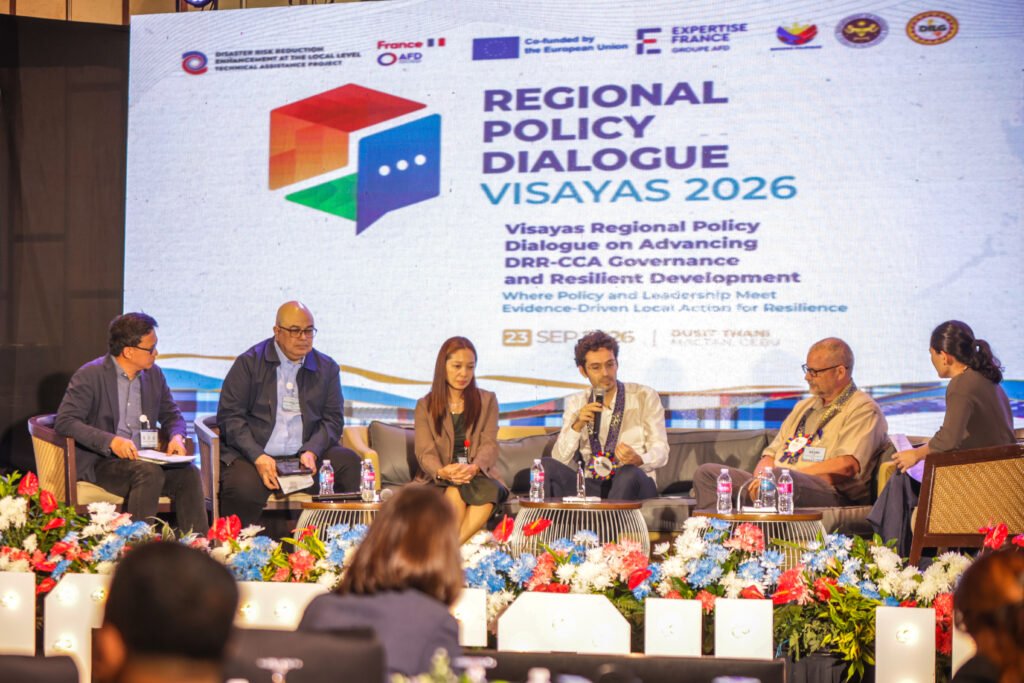
Over the years, the Philippines has built a comprehensive policy, institutional, and financing framework for disaster risk reduction and management (DRRM) and climate change adaptation (CCA). The Dialogue convened to respond to a different challenge: ensuring these frameworks are consistently translated into effective results at the regional and local level, where differences in institutional capacity, coordination mechanisms, and financing continue to shape outcomes on the ground. By bringing national and local perspectives together, the Dialogue provided a platform to examine how policy frameworks can be better translated into practical and locally responsive action.
Through a structured program including an Executive Panel Dialogue, an Institutional Panel Dialogue, and an Evidence and Policy Forum, participants examined how existing DRR-CCA policies, plans, and financing mechanisms are applied across regional and local settings, and identified the governance, coordination, and capacity development priorities needed to strengthen implementation for greater resilience outcomes. Then, an Innovation Dialogue and Policy Co-Creation segment brought government, development partners, and technical experts together to develop practical policy and implementation options to ultimately advance reforms that bridge the gap between national standards and local realities.
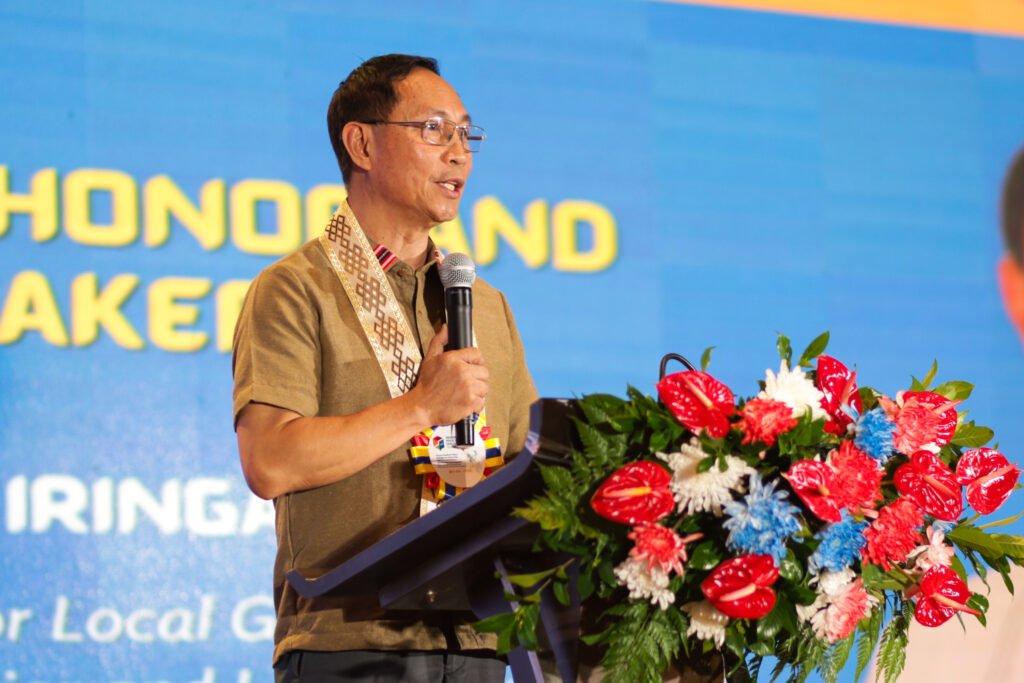
Department of the Interior and Local Government (DILG) Undersecretary for Local Government Marlo L. Iringan, CESO III, emphasized that the work of building resilience extends well beyond government. “Resilience is a shared responsibility, not only among us in government, but more importantly among communities, in their understanding and management of the risks they face; among our households, in ensuring access to reliable information; and among individuals, in recognizing that preparedness is not something that begins only when the warning is already upon them.”
The Dialogue’s discussions culminated in the formulation of the Visayas Regional Policy Messages, a consolidated set of regional priorities, documented implementation challenges, and strategic recommendations that will serve as the region’s principal contribution to the DRREALL-TA Research-to-Policy Roadmap. The messages will provide a basis for further discussion and validation through the subsequent forums, helping connect regional implementation experience and evidence with broader policy directions for DRR-CCA governance.
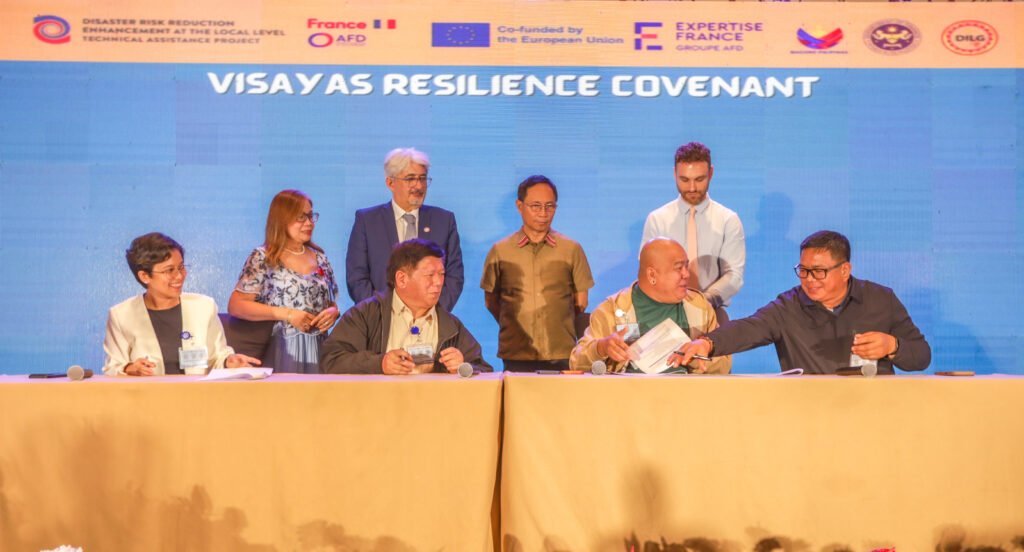
The Visayas Regional Policy Dialogue is the first of three policy dialogues organized by the DRREALL-TA Project. It will be followed by the Mindanao Regional Policy Dialogue in December 2026, which will validate and enrich the emerging policy directions with implementation experience and priorities from Mindanao, and the National Policy Dialogue in February 2027, which will consolidate the policy messages from both regional dialogues into a coherent national agenda for DRR-CCA governance. Together, the three dialogues will connect evidence, policy and implementation experience to support more effective and locally responsive DRR-CCA governance across the Philippines.
“Regional Policy Dialogues, such as this, provide each one of us with precisely that opportunity and space, not simply to exchange policies and ideas, but also to ask ourselves what these ideas mean when they reach the ground, and to understand and realize them better through the lens of actual people-to-people experience,” Usec. Iringan said.
The Dialogue brought together almost 150 participants, including 16 Local Chief Executives (LCE), Local Government Units representatives, national government agencies, development partners, academic and research institutions, civil society organizations and private sector stakeholders from across the Visayas.
###
Media Contacts
Anthony Robert
DRREALL-TA Project Leader, Expertise France
anthony.robert@expertisefrance.fr
Marqueza Reyes
DRREALL-TA Technical Leader, Expertise France
marqueza.reyes@expertisefrance.fr
Davinci Maru
Press and Information Officer, EU Delegation to the Philippines
Davinci.maru@eeas.europa.eu